
Manta Mode Blog
Your Brain Is A Shady Drug Dealer: Why Willpower Fails
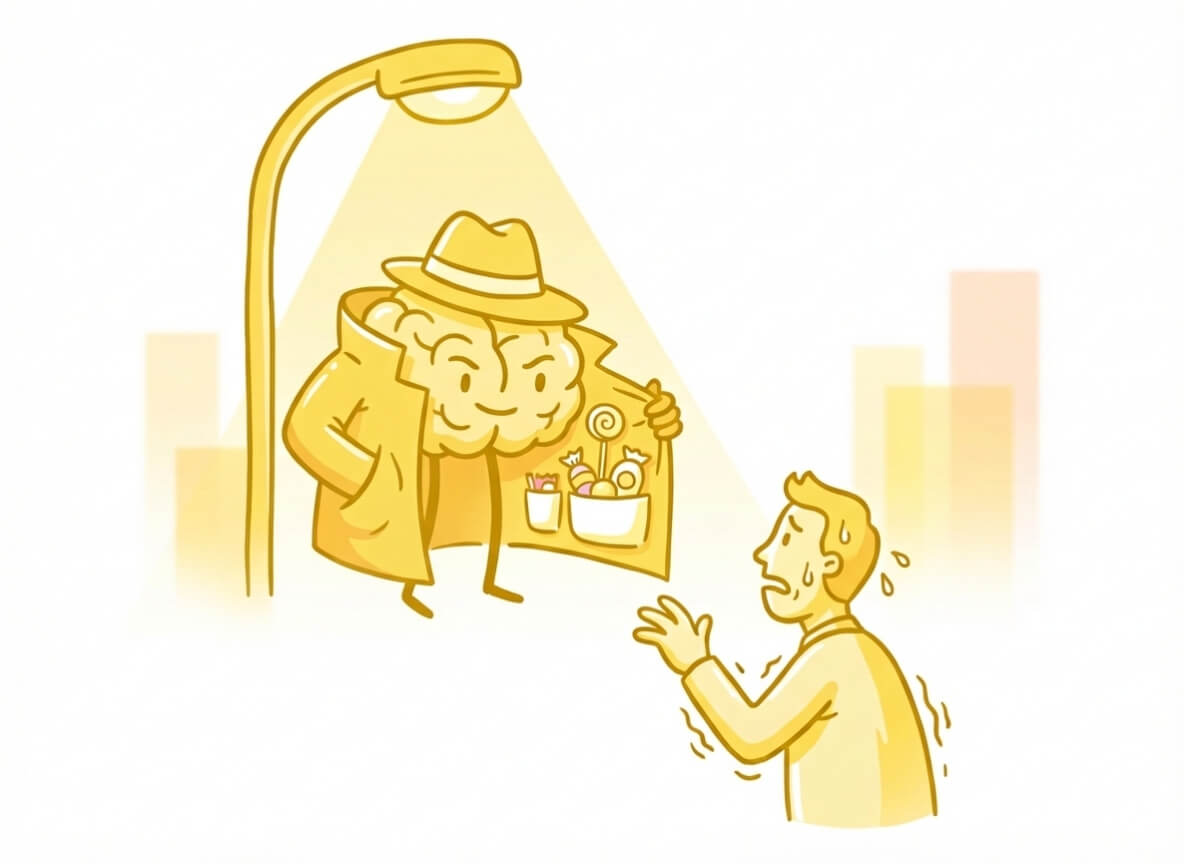
Paul has been dealing with some health stuff.
Specifically, the sores on his toes weren’t healing, and his doctor dropped the fun news that the numbness? Yeah, that’s permanent nerve damage. The good news: he can totally prevent more damage. He just has to, you know, actually manage his blood sugar.
Paul’s response? “I know what I have to do. I just don’t do it.”
As he likes to say, “Totally self-aware, zero self-repair.” [sigh] He has been taking matters more seriously this time and has cleaned up his diet, is eating way fewer sweets, being really mindful, and making better choices. I’m pretty proud of what he’s doing because I know it’s not easy.
Recently, his coworkers brought Girl Scout cookies into the office. In the past, Paul would’ve happily demolished an entire box, maybe two, without a second thought. Now? He’s white-knuckling it every time he goes past the break room because his brain is screaming at him. It wants to touch the cookies. Smell the cookies. Eat the cookies.
And here’s the wild part: He gets the shakes. Physical shakes. His brain is making him feel legitimately sick because he won’t give it what it wants.
I realized his brain wasn’t just being annoying because he’s trying to change a habit. It’s being a full-on shady drug dealer, and it will do everything in its power to get him back to his “normal”, even if that normal is actively destroying him.
Homeostasis: AKA “Your Brain Thinks Normal = Safe”
The thing your brain cares about most is staying alive. It does this by maintaining homeostasis, basically, keeping everything stable and predictable.
For Paul, his brain has learned that eating cookies = normal. And for any brain, normal = safe. It didn’t matter that those cookies were spiking Paul’s blood sugar so hard it would make a porcupine jealous. His brain just knows that’s what he usually does, and usual feels safe.
So when you try to change a pattern, say, by not eating cookies, your brain freaks out. It sees this as a threat to survival. It doesn’t understand that you’re trying to save your toes. It just knows you’ve deviated from normal (safe), and it will pull out every tool in its arsenal to drag you back.
This is why changing habits feels so damn hard. You’re not just fighting a craving. You’re fighting your brain’s entire security system, which is convinced you’re about to die because you chose a celery stick instead of a Thin Mint.
The really messed-up part? Your brain will physically punish you for trying to change. It’ll give you headaches, make your hands shake, flood you with anxiety, and whisper sweet nothings like “You’d feel so much better if you just ate the cookie.”
It’s not trying to be a dick. It’s just doing its job of keeping you “safe” in the only way it knows how. But man, it’s really not helping.

The Willpower Problem: Meet Your Exhausted Viking
So how do most people deal with this? Willpower. They just “try harder.” They build a wall between themselves and the cookies and hope it holds.
Here’s the problem: Willpower isn’t a wall. It’s a dude with a shield. And he gets tired.
Picture a Viking standing between you and the rabid raccoon pack of your brain’s craving crew. He’s a big guy, has a big shield, and he’s doing his best to hold them back. But he’s just a dude. He gets tired. He needs to pee. He needs a snack. He can’t stand there forever.
And the raccoons? They’re relentless. They’ll wait. They’ll push. They’ll scream about cookies until that Viking’s arms give out, and then, WHAM, they’re shoving Samoas in your face while your Viking buddy is passed out on the floor.
This is why “just use willpower” doesn’t work long-term. You can’t white-knuckle your way through every craving for the rest of your life. The Viking will eventually collapse, and you’ll be left defenseless against the Cookie Raccoons.
You need a better system. One that doesn’t rely on sheer force of will.
The Data Audit: Weaponizing Reality Against Your Brain
Here’s the move: Start collecting data on what actually happens when you give in to your brain’s demands.
Next time you’re about to eat the treat your brain is screaming about, slow down and take notes in a judgement-free manner, just to gather evidence.
Right before you eat it: How do you feel? Chances are, you feel amazing. The anticipation is peak dopamine. Your brain is doing a victory lap. It won! It’s getting the thing!
First bite: Heavenly. You’ve never tasted anything so good in your entire life. This is exactly what your brain promised.
Halfway through: Okay, pause. Check in. Are you still as happy about this cookie? Does it even taste that good anymore? Or are you just eating it because it’s there?
30 minutes later: How do you feel now? Guilty? Ashamed? Disappointed that you caved? Probably. And now your brain picks up a stick and starts beating you with it. “You have no self-control. You’re never going to get this right.”
Wait. Didn’t you want me to eat the cookie in the first place, Brain? What the everlovin’ heck?
Later that night: What’s your body doing? Blood sugar spike? Energy crash? Stress about messing up your streak?
The next morning: Still feeling good about that cookie? Or do you wish you’d made a different choice?
Now you have data. Real, concrete evidence of what actually happens when you listen to your brain’s Cookie Dealer pitch.
The Conversation: Talking Back to the Dealer
This is also the exact moment we talk about in SPARK 101 as the Urge/Match Strike phase (a.k.a. the Pop)—that first little ping where the craving lights up and the raccoons start chanting like it’s an emergency. The Dealer is just the character for what’s happening there: your brain making the fastest, shiniest pitch to get you back to “normal” before you have time to think.
Here’s where it gets good. Next time your brain starts its spiel, “We need that cookie. We’ll feel so much better. Just one won’t hurt,” you can actually respond with facts.
“Hold up, Brain. Last time I listened to you and ate the cookie, you came back and beat me up about it for three days. What’s up with that?”
“And you’re telling me this will make me feel better? That’s a flat-out lie. Last time, I felt like crap for the rest of the day. My blood sugar spiked, I got anxious, and then you made me feel guilty. So no, this is not the ‘feel better’ move you’re selling it as.”
“Plus, if I keep doing what you want, eating cookies like I used to, I’m going to end up needing insulin, going blind, or on dialysis. You’ll like those options way less than skipping a cookie right now.”
You’re showing your brain that the old pattern isn’t actually safe. It’s the opposite of safe. And the new pattern, choosing the protein shake or the celery stick, is actually what keeps you active, healthy, and doing all the things you (and your brain) enjoy.
It’s about having a rational conversation with a part of you that’s operating on bad intel rather than shaming or fighting yourself.
Containment Tips: Creating Space to Think
Okay, but how do you actually get your brain to shut up long enough to have this conversation? Because when the raccoons are screaming and the shakes are hitting, it’s hard to think straight.
Here are three moves to create a little breathing room:
1. The 5-Minute Circuit Breaker
Tell your brain, “Wait, maybe in 5 minutes.” It’s a delay. It takes the urgency out of the craving and gives you space to think. Most of the time, the craving will fade on its own if you can just wait it out.
2. The Physical Pattern Interrupt
Do something physical that snaps your nervous system out of “I NEED THE COOKIE” mode. Splash cold water on your face. Do 10 jumping jacks. Go for a walk around the block. Your brain can’t focus on two intense physical sensations at once, so you’re essentially distracting it with a different input.
3. Name the Dealer
Out loud, say, “Okay, the Dealer is making his pitch right now.” This creates distance between you and the craving. The craving isn’t you: it’s a raccoon doing his shady sales routine. Your brain is the one hearing the pitch and panicking like it’s urgent. You don’t have to buy what he’s selling.
These aren’t “fixes.” They’re containment strategies. They give you enough space to pull out your data, have the conversation, and make a conscious choice instead of just reacting.
Conscious Choice: Own It, Whatever You Pick
Even with all the data and all the containment strategies, you might still decide to eat the cookie. And you know what? That’s fine.
If you’re going to eat it, enjoy the fuck out of it.
Make it a conscious choice. Look at the data. Acknowledge both sides. And if you still decide “Yep, I want this cookie,” then own that decision fully.
Don’t eat it and then let your brain beat you up about it. When the guilt starts creeping in, remind yourself: “I made this choice. I saw the pros and cons, and I chose the cookie. If I don’t like how I feel now, I can make a different choice next time.”
Same thing when you feel icky later or your blood sugar spikes. “Yep, I chose that. And now I have more data about what happens when I make that choice. I can use this information next time.”
Over time, you’ll start making different choices more often. Not because you’re “being good” or using willpower, but because you’ve trained your brain to see the real consequences: not just the shiny, dopamine-soaked fantasy the Dealer is selling.
Your Brain Isn’t the Enemy
Look, your brain is doing exactly what it evolved to do: keep you alive by sticking to what’s familiar. The problem is, it hasn’t caught up to the fact that Girl Scout cookies and blood sugar spikes are a thing.
While you can’t “fire” your brain, you can retrain it. You can show it the data. You can have the conversation. You can create space between the craving and the choice.
Eventually, your brain will start to realize that the new pattern: the one where you don’t demolish a box of Thin Mints: is actually the safer choice. It just takes time, patience, and a lot of conversations with your internal Cookie Dealer.
Paul’s still walking past those cookies every day. Some days are easier than others. But he’s got his data now. He knows what happens when he eats them, and he knows what happens when he doesn’t. And that’s way more powerful than willpower could ever be.
Update: Paul is doing much better! He even got a continuous blood glucose monitor so he has even more data to fend off his brain’s cookie dealer. His blood sugars are within the normal ranges, granted still on the higher end, but hey, that’s a huge improvement given he was living above the high range of what was acceptable. So looks like he’s heading in the right direction and making better choices a lot more often.
My philosophy is that you have to experiment to find what works for you. So go ahead—try something a little uncomfortable, kiss a few frogs, and see what sticks. Happy experimenting!


New to Manta Mode?
Start with these Posts To Get Your Bearings
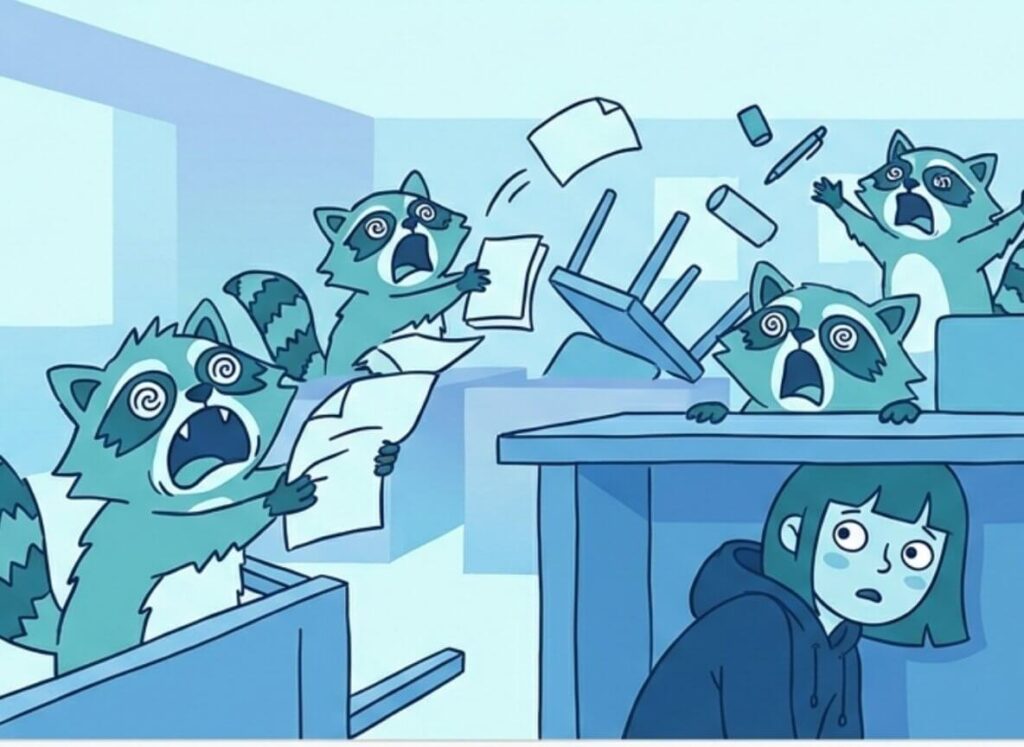
The Manta Mode Raccoons: A Field Guide
Manta Mode Blog The Manta Mode raccoons: A Field Guide Meet the Crew Welcome to…

SPARK 101: The Overview
Manta Mode Blog SPARK 101: The Overview If you’ve been hanging around Manta Mode for…

Confessions of a Weirdo: Why I’m Not Here to Save You
Manta Mode Blog Confessions of a Weirdo: Why I’m Not Here to Save You A…






Home
Take the Quiz
SPARK Foundation
Rewrite the Filter
About Us
Blog
Shop
Community
Newsletter Archive
Contact Us
Contact Info
Email: hello@mantamode.com
Phone: (858) 283-5319
Mailing address:
4079 Governor Drive #5058
San Diego, CA 92122
@Manta Mode | All Rights Reserved
Privacy Policy | Terms & Conditions