
Manta Mode Blog
The Emotional Flu: Why You’re Catching Everyone Else’s Stress
So there’s this moment on Diary of a CEO where Dr. Tara Swart is telling a story from a conference where she was a speaker.
During the Q&A, an audience member hits her with: “Is it my boss’ fault I’m fat?”
No joke.
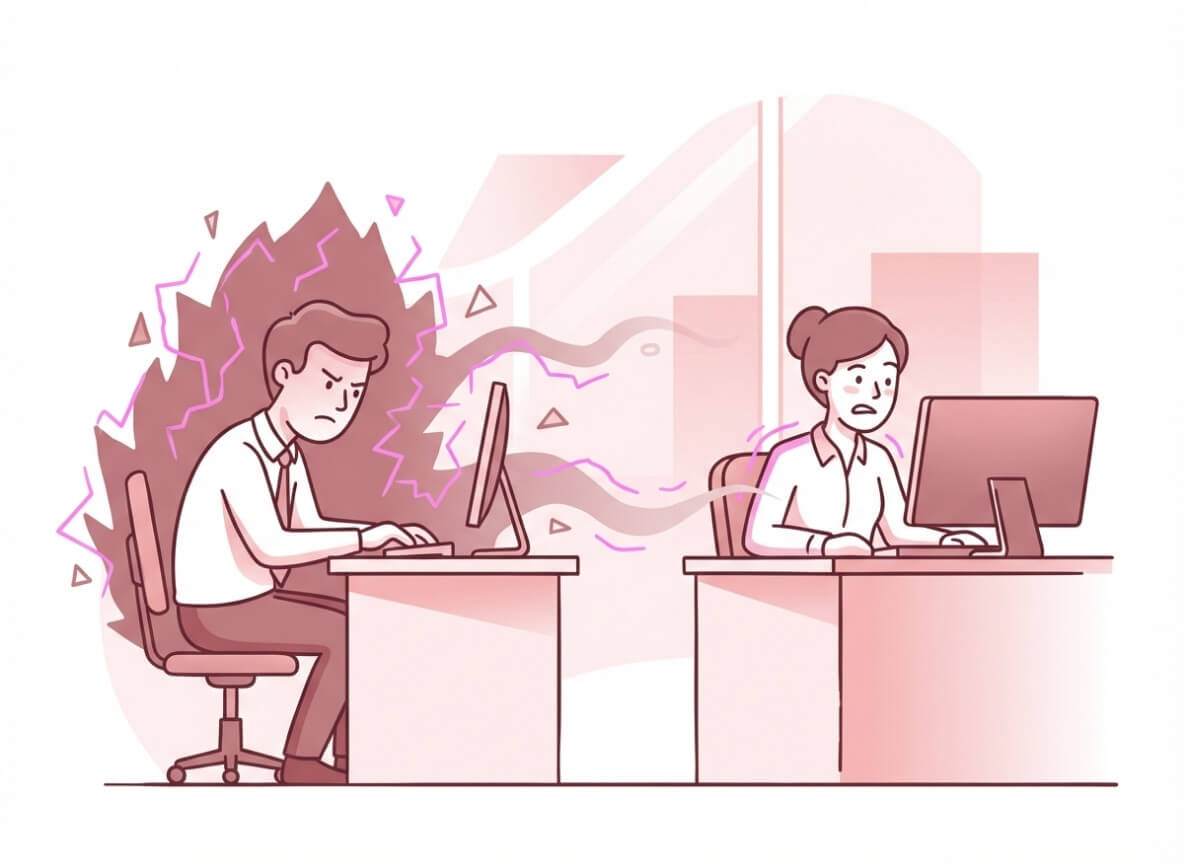
The context: the subject was how stress is contagious, like, measurably, biologically contagious. If you sit next to someone with high stress or low productivity, yours tanks too. And apparently, if your friend gets divorced, you’re suddenly 75% more likely to get divorced yourself.
Which led to the obvious question: If the CEO is stressed, and that stress trickles down through the entire company… is the CEO responsible for everyone’s stress-eating through their lunch breaks?
The answer is more complicated than “yes” or “no,” but the science behind it? Wild. Let’s dig in.
Your Brain Has Built-In Copycat Neurons
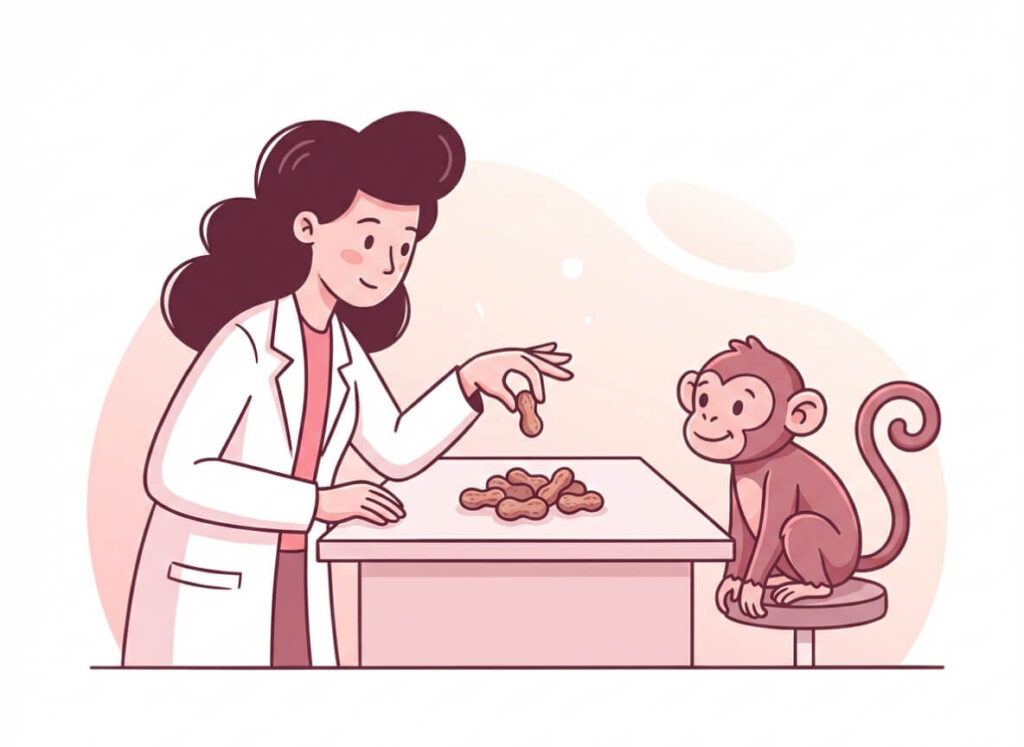
Back in the 1990s, a group of Italian researchers were studying monkeys. They had these little electrodes measuring brain activity while the monkeys picked up peanuts.
Pretty standard neuroscience stuff.
But then something weird happened. One of the researchers reached for a peanut himself, and the monkey’s brain lit up, the exact same neurons fired as if the monkey was the one reaching for the peanut.
The monkey wasn’t moving. It was just watching.
These became known as mirror neurons, and they’re basically your brain’s automatic mimicry system. When you see someone smile, your mirror neurons fire as if you’re smiling. When someone yawns, your brain starts prepping your face to yawn too (even if you fight it).
And when someone near you is stressed? Your brain doesn’t just observe their stress. It starts experiencing it as if it’s your own.
Which brings us to the contagion part.
Stress Spreads Like the Flu (But Faster)
In one study, researchers had participants watch videos of people going through stressful situations, like public speaking or solving impossible math problems under time pressure. The people watching weren’t doing anything stressful themselves. They were just… watching.
Their cortisol levels spiked. Their heart rates increased.
Their bodies were responding as if they were the ones under pressure, even though they were sitting safely in a lab, doing absolutely nothing.
This wasn’t just empathy. It’s biological mimicry. What happens is your nervous system treats someone else’s stress as a potential threat signal, and your body is preparing to respond accordingly.
The technical term is emotional contagion, the unconscious transmission of emotions between people. And stress? Stress is particularly contagious because, evolutionarily speaking, if someone near you is freaking out, there’s probably a bear nearby. Better safe than sorry.
Your brain doesn’t care that the “threat” is actually just Janet in accounting panicking about a spreadsheet.
The Workplace Stress Spiral
Here’s where the CEO-and-obesity joke starts making sense.
Your Boss Is Making You Fat (No, Seriously)
This part comes straight out of Dr. Tara Swart’s point on Diary of a CEO, and is absolutely fascinating.
The gist: stress can “leak” from person to person in ways that aren’t just wooey “I feel your aura” vibes. When someone’s in a chronically stressed state, their body is pumping out cortisol which is your main stress hormone. And cortisol doesn’t politely stay inside their body. It shows up in real physical stuff like sweat that gets transmitted to another person through touch or even close proximity. And what’s more, the cortisol can become airborne. People can subconsciously smell someone else’s stress, which then leads your body to react to their stress as a threat as well. Wild.
Now zoom that into a workplace:
- A boss is constantly urgent, edgy, and in panic-mode.
- Everyone around them is reading that as “we are not safe.”
- Your body responds by shifting into survival mode.
Survival mode is great when there’s a bear. In an office? It’s a mess.
Cortisol’s job is to mobilize energy fast: raise blood sugar, keep you alert, and prioritize short-term survival over long-term health. And when cortisol stays high longer such as with chronic stress, constant pressure, never-off Slack pings, it can nudge your body toward storing more fat around your belly because your system is getting the message: “Threat is nearby. Stockpile resources.”
So when people joke “my job is making me gain weight,” sometimes that’s not metaphor. Sometimes it’s cortisol overrunning the place like the cane toads did in Australia. If you don’t know – in 1935 cane toads were introduced to eat the beetles that were eating sugar cane crops and instead of controlling the beetle population, without a natural predator to check the population, they spread across Queensland and beyond. Also, because they’re toxic, they killed off massive numbers of the region’s natural predators creating even more ecological havoc in the system – very similar to what unchecked cortisol does to yours.
Knowing that a stressful environment can create real, physical downstream effects in people is important because, hopefully, you can mitigate either the exposure or the stress in the first place or you at least know what’s contributing to some of the downstream effects in your ecosystem.
If you sit next to someone who’s constantly stressed, your productivity drops. If your manager is in a chronic state of low-level panic, that panic spreads through the team like wildfire.
Studies on workplace dynamics show that emotions, especially negative ones, create feedback loops. One stressed person makes the people around them stressed, which makes those people less effective, which creates more stress, which… you get the idea.
It’s not just about “vibes.” It’s about cortisol synchronization. When you spend time around someone who’s stressed, your body starts matching their hormonal state. Your cortisol rises. Your heart rate variability drops. You start operating in the same heightened-alert mode they are, even if you don’t consciously feel “stressed.”
And if that person happens to be the CEO? Well. That stress trickles down through every layer of the organization.
So yeah. Maybe the CEO is partially responsible for the communal stress-eating habit. At least biologically speaking.
Your Friend’s Divorce Might Predict Yours
Here’s the one that really messed with my head.
Researcher Rose McDermott at Brown University found that if someone in your immediate social circle gets divorced, you’re 75% more likely to get divorced yourself.
Not because you’re suddenly thinking “hey, divorce looks fun.” But because divorce, like stress, is socially contagious.
When someone close to you goes through a major life shift, it subtly recalibrates what feels “normal” or “acceptable” to you. It opens up possibilities you probably hadn’t seriously considered before. And on a neurological level, you’re absorbing their emotional state during that transition, the stress, the uncertainty, the relief, the chaos.
Your mirror neurons don’t distinguish between “their feelings” and “my feelings.” They just fire.
This applies to way more than divorce, by the way. Happiness is contagious. So is anxiety. So is motivation (or the lack of it). You’re not just influenced by the people around you, you’re biologically syncing with them.
Why This Matters More Than You Think
Look, this isn’t about blaming your environment for everything. You’re not a passive sponge just absorbing everyone else’s emotional states without any agency.
But.
Your environment is literally rewiring your nervous system in real time.
The people you sit next to at work, the friends you spend the most time with, the family members you live with, they’re not just influencing your mood. They’re influencing your baseline stress levels. Your cortisol patterns. Your heart rate variability. The way your body interprets safety vs. threat. And if you’re constantly practicing being stressed, double whammy – your system starts to calibrate that as “normal” and you get really good at finding other things to get stressed about.
If you’re constantly surrounded by people operating in fight-or-flight mode, your nervous system is going to start treating that as the default. If you’re around people who are calm, grounded, and emotionally regulated? Your nervous system learns that pattern instead.
This is why “just relax” doesn’t work when you’re in a high-stress environment. You’re not just battling your own stress, you’re battling the collective stress of everyone around you.
And here’s the cool part: it works both ways.
Netflix & Chill… or Stress?
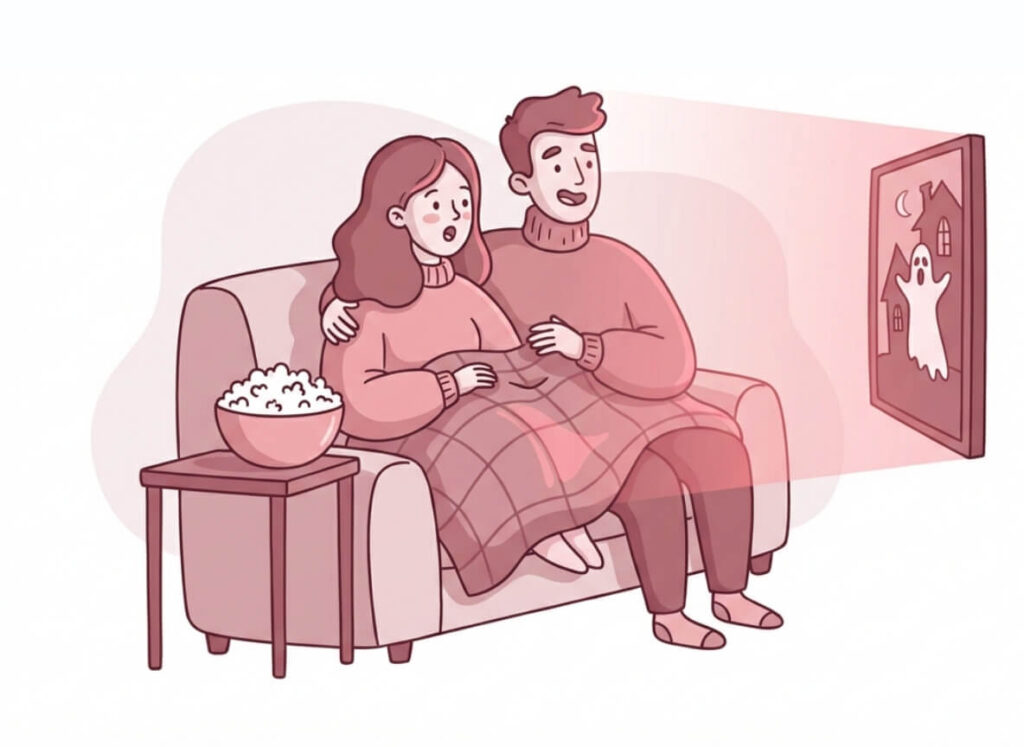
If your idea of “winding down” is watching a show where someone is hunted through a forest while tense violin music saws at your nervous system… I have news.
Your brain doesn’t have a clean little folder labeled “FICTION, DO NOT PANIC.”
Mirror neurons and your general threat-detection hardware respond to what you’re seeing and hearing—faces, fear, tone of voice, danger cues. Which means intense TV can create a mini version of the same stress contagion we just talked about.
Can that show up in your body? It sure does.
In one study, about 26% of people had a cortisol spike just from watching a stressful scene. Just sitting there. On a couch. Not being chased. No real bears. No real Janet-from-accounting either.
So if you’ve been wondering why your “chill” routine still has you going to bed kind of wired, clenching your jaw, and doom-snacking… it might be because your cortisol never got the memo that Netflix was supposed to be the off-switch.
If you want a simple experiment: swap one high-intensity episode for something that signals “safe” to your body, light comedy, nature docs, chill music videos, whatever). See what happens to your sleep and your baseline tension.
Slasher Movies + True Crime: Why People Like This Stuff
Now, to be fair: lots of people love slasher films and true crime. And no, it doesn’t mean they’re a closet sociopath. They’re doing a very human thing.
Some folks are what researchers call “Dark Copers.” Also known in the wild as: “I relax best when the soundtrack is screaming.”
This overlaps with the idea of “scary play,” using controlled fear as a safe way to process big sensations.
For some nervous systems, scary media works because:
- It gives your free-floating anxiety a specific target (“It’s the killer! That’s why I feel like this!”).
- You get the adrenaline/cortisol hit, but in a controlled container (you’re safe, you can pause, you can turn it off).
- It’s basically anxiety training: practice feeling fear, then practice coming back down.
Your body gets to run the fear-response program while your brain knows you’re still on the couch, under a blanket, with snacks, which is a very powerful safety cue, in case you were wondering.
If you’re not sure which one you are, notice what you reach for when you’re stressed. Do you seek “cozy safe,” or do you seek “scary safe”? And if you’re watching intense stuff and feeling worse afterward, that data is telling you something. Your media diet is part of your nervous system’s environment. And your nervous system is taking notes.
Calm is Contagious Too
Just like stress spreads, so does calm.
One person in a room who’s genuinely grounded, speaking slowly, breathing deeply, not matching the frantic energy, can shift the entire room’s nervous system response.
Mirror neurons don’t discriminate. If they’re going to make you mimic someone’s panic, they’ll also make you mimic someone’s calm.
This is why certain people feel like they “bring the energy down” in a good way. Or why being around one specific friend makes you feel instantly more relaxed.
Your mirror neurons are constantly scanning for social cues about what’s safe and what’s not. And when someone near you is signaling “we’re good, no threats here,” your body starts to believe it.
So What Now?
Obviously, going full hermit and avoiding all stressed humans forever is not a viable option.
But it’s worth paying attention to the people you’re spending time with and what emotional states you’re absorbing by proximity. Because the person sitting next to you at work, the friend group you see every weekend, the family dynamics you’re swimming in, they’re not just background noise. They’re actively shaping your nervous system’s sense of what’s normal, what’s safe, and what’s worth panicking about.
And if you’ve been wondering why you feel inexplicably drained after certain interactions, or why your stress levels seem to spike even when nothing is “technically” wrong?
You might just be catching someone else’s emotional flu.
Worth thinking about.
My philosophy is that you have to experiment to find what works for you. So go ahead—try something a little uncomfortable, kiss a few frogs, and see what sticks. Happy experimenting!


New to Manta Mode?
Start with these Posts To Get Your Bearings
The Manta Mode Raccoons: A Field Guide
Manta Mode Blog The Manta Mode raccoons: A Field Guide Meet the Crew Welcome to…

SPARK 101: The Overview
Manta Mode Blog SPARK 101: The Overview If you’ve been hanging around Manta Mode for…

Confessions of a Weirdo: Why I’m Not Here to Save You
Manta Mode Blog Confessions of a Weirdo: Why I’m Not Here to Save You A…






Home
Take the Quiz
SPARK Foundation
Rewrite the Filter
About Us
Blog
Shop
Community
Newsletter Archive
Contact Us
Contact Info
Email: hello@mantamode.com
Phone: (858) 283-5319
Mailing address:
4079 Governor Drive #5058
San Diego, CA 92122

@Manta Mode | All Rights Reserved
Privacy Policy | Terms & Conditions