
Manta Mode Blog
The Shutdown Stress Type Starter Kit: 7 Ways to Turn the Lights Back On
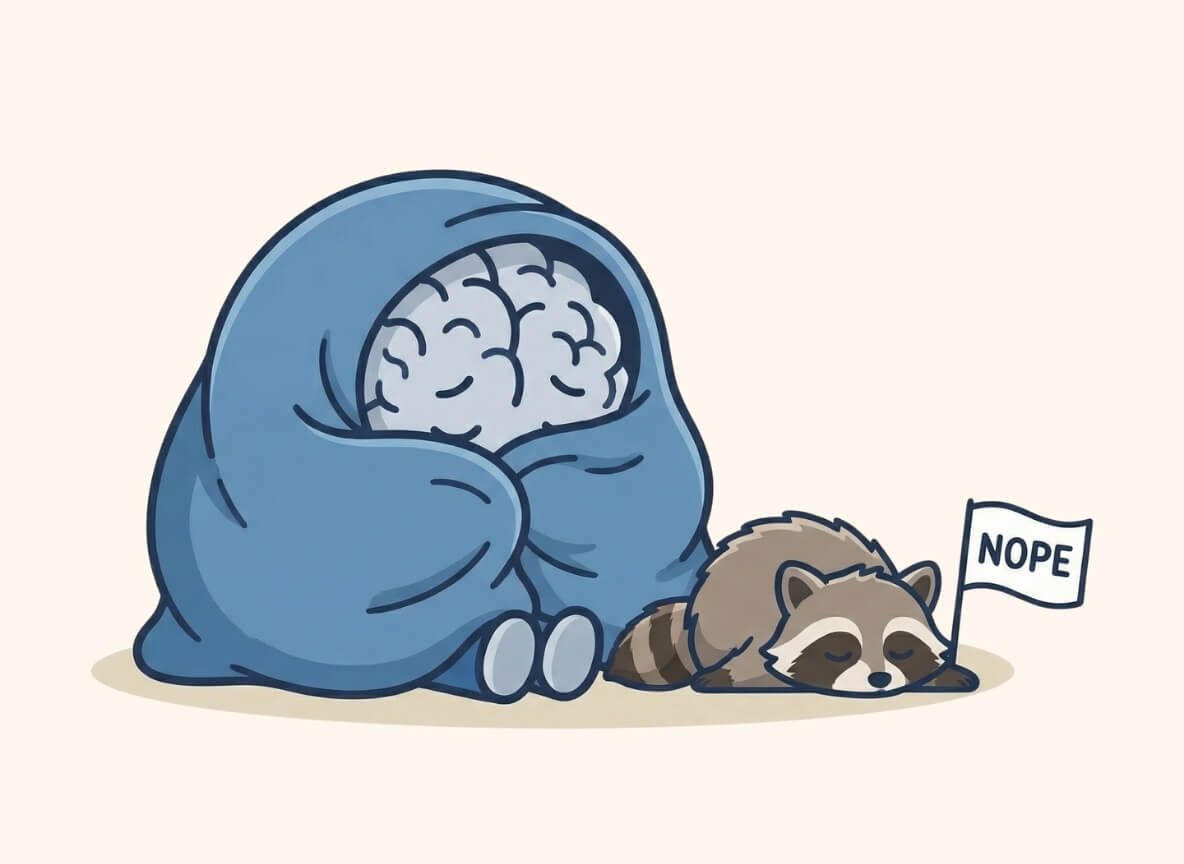
So your brain went into turtle mode?
When Your brain decides the world is too much and it’s time to shut the bunker blast doors, everything goes foggy. You’re stuck in the mental equivalent of a power outage, thoughts moving like molasses, emotions feeling like they’re happening three rooms away, and your entire system running on “nope, not today.”
This is your Shutdown in action. The Raccoons convinced your brain that the safest move is to go offline entirely. No thoughts, no feelings, just… static.
The problem? Your brain’s not great at knowing when it’s safe to come back out.
So we’re keeping this simple: the top 7 First Thing to Do interrupters. These are the soft knocks on the bunker door, just enough of a ping to tell your brain, “Hey. We’re still here.”

1. Pinky Wiggle
The Move: Wiggle one pinky like you’re checking if the power grid is back online.
The How: Pick either hand. Wiggle your pinky for 10–20 seconds. Then do the other one. If you can, add: wiggle toes → roll ankles → tiny shoulder shrug.
The Why: Shutdown brain is your brain hitting the minimize everything button. Micro-movement is a low-threat signal that says, “We’re safe enough to move.” It’s small, but it’s a clear body-based ping that helps Your brain reconnect to the present without demanding motivation.
2. Barefoot Floor Scan
The Move: Put your bare feet on the floor and feel the ground.
The How: Stand or sit barefoot. Slowly shift weight: heel → ball of foot → toes. Notice temperature, texture, pressure. Do 3 slow passes.
The Why: Shutdown brain disconnects you from physical data. Feet on floor gives your brain proof of safety and location: “We’re here. We’re not floating in the void.” Low effort, high signal.
3. Loud Music Jolt
The Move: Use sound to kick start the system gently-ish.
The How: Put on one song that has a clear beat. Louder than background, but not eardrum damaging. Focus on the beat for 30–60 seconds. Bonus points if you tap along or nod your head.
The Why: Shutdown brain loves to drift into nowhere-land. A strong beat gives your brain something structured to lock onto. It’s like tossing a rope into the fog for you to grab hold of and follow back out.
4. Drummer’s Reboot
The Move: Drumming patterns with your fingers.
The How: Use your fingertips to tap a rapid, 1-2-3-4 rhythm on your collarbones. Change the tempo: go fast for 10 seconds, then glacial for 10.
The Why: Shutdown is a low-vibration state where your brain thinks the best move is to play dead. You feel heavy, numb, or checked out. This rhythmic, bilateral tapping provides a gentle ping to the nervous system. It signals to the hardware that the body is still online, active, and safe without being overwhelming or triggering a secondary panic.
5. Crunchy Snack Attack
The Move: Eat something crunchy like you’re trying to wake up your senses.
The How: Grab something crunchy, pretzels, carrots, nuts, crackers, celery. Take 5 slow bites and listen to the crunch. Notice taste + texture.
The Why: Crunch is a big sensory input. Chewing also sends a low level “we’re safe enough to eat” signal to your brain.
6. Box Breathing Reset
The Move: Breathe in a square. Yes, it’s dorky. Yes, it works.
The How: Inhale 4 seconds → hold 4 → exhale 4 → hold 4. Repeat 4 rounds. If 4 is too much, do 3.
The Why: Predictable rhythm tells Your brain “we’re not in immediate danger.” Breathing is one of the few levers you can pull that speaks directly to the nervous system.
7. Name It Game
The Move: Label what’s happening in plain language.
The How: Say (out loud if you can):
“Shutdown.”
“Fog.”
“Numb.”
“Bunker mode.”
“Turtleing.”
Then add one neutral fact: “I’m sitting on the couch.” or “It’s Tuesday.” or “My hands are cold.”
The Why: Naming moves you from “I am this” to “I’m noticing this.” That tiny shift gives your brain a toe-hold back on the controls.
The Real Talk
These aren’t magic wands. Some will work for you, some won’t. Some will work today but not tomorrow. Some will feel ridiculous (they are: embrace it).
The point is to experiment. Try the ones that make you cringe a little. The discomfort might be exactly what your nervous system needs to snap out of the pattern.
The Shutdown Brain operates on one faulty premise: that cutting the power and going numb is the only way to survive the stress. It feels like safety, but it’s actually just a system crash. You can’t talk a frozen screen into rebooting with a PowerPoint presentation. You have to physically jiggle the mouse with a reset before the raccoons decide it’s time for a permanent nap.
Pick one. Try it. See what happens
My philosophy is that you have to experiment to find what works for you. So go ahead—try something a little uncomfortable, kiss a few frogs, and see what sticks. Happy experimenting!


New to Manta Mode?
Start with these Posts To Get Your Bearings
The Manta Mode Raccoons: A Field Guide
Manta Mode Blog The Manta Mode raccoons: A Field Guide Meet the Crew Welcome to…

SPARK 101: The Overview
Manta Mode Blog SPARK 101: The Overview If you’ve been hanging around Manta Mode for…

Confessions of a Weirdo: Why I’m Not Here to Save You
Manta Mode Blog Confessions of a Weirdo: Why I’m Not Here to Save You A…






Home
Take the Quiz
SPARK Foundation
Rewrite the Filter
About Us
Blog
Shop
Community
Newsletter Archive
Contact Us
Contact Info
Email: hello@mantamode.com
Phone: (858) 283-5319
Mailing address:
4079 Governor Drive #5058
San Diego, CA 92122

@Manta Mode | All Rights Reserved
Privacy Policy | Terms & Conditions

