
Manta Mode Blog
The Tetris Effect: Why We’re Pros At Spotting Problems
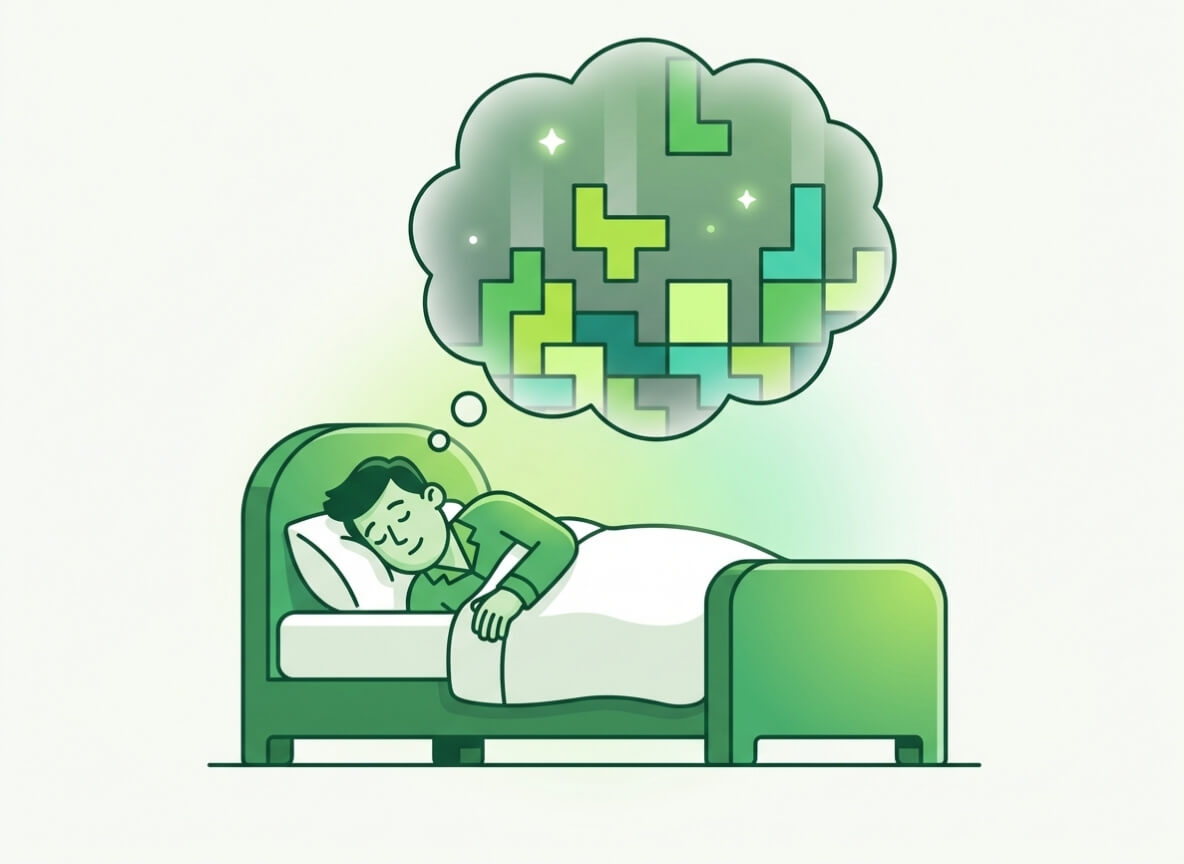
You know that thing where you play Tetris for three hours straight, and then you go to bed and all you can see are falling blocks?
That’s the Tetris Effect.
So what is the Tetris Effect? It was first described in the 1980s when researchers noticed that people who played a lot of Tetris started seeing the world through “block-colored glasses.”
Players would walk into a grocery store and catch themselves arranging a shelf in their head like it’s Level 12.
Players would look at floor tiles and think, “That’s basically a grid. I could clear that line.”
Players would stare at random shapes and automatically try to rotate them into place.
Players would (yep) dream in falling shapes.
Here’s what was happening: their brain rewired itself based on repetition. Every time they played Tetris, they reinforced a specific type of pattern recognition, spatial reasoning, shape rotation, and gap-filling.
Tetris players built new neural pathways to get better at that task. The more they played, the stronger those pathways became. Eventually, their brain started applying that same lens to everything they looked at, even when they weren’t playing.
That’s neuroplasticity in action. Your brain adapts to what you do most often. It sculpts itself around your habits, your focus, and your patterns.
And here’s the kicker: it doesn’t just happen with Tetris.
It happens with everything you practice.
If you’ve spent the last five years looking for problems, scanning for threats, and overthinking every interaction? Congratulations. You’ve accidentally trained your brain to find everything wrong with your situation.
This is just your brain doing exactly what it’s supposed to do. You’ve been playing Spot the Problem, and your brain got really, really good at it.
Let’s say you grew up in a house where the adults argued, and you got good at spotting the storm coming before it hit.
You learned to read the room. Track tone shifts. Notice the tiny signals that meant, “Welp, here we go.” So now your brain has flagged all of these tiny signals as “danger.”
Your brain’s job is to keep you safe. It scans for danger, looking for what could go wrong based on what you learned as you grew up, all of the red flags, the things that led to fights, the potential disasters.
Every. Single. Day.
And guess what? Your brain gets really good at it.
You become a black belt in:
- Noticing when someone’s tone shifts
- Predicting worst-case scenarios
- Spotting inconsistencies in what people say
- Finding the flaw in every plan
- Catastrophizing before breakfast
So rather than asking yourself, “what’s wrong with me?” ask what have I been telling my brain to look for?
When you practice a pattern long enough, your brain turns it into a skill.
You trained yourself to play “Spot the Threat”, and now you can’t stop seeing them.
The “Aha” Moment
When you repeat a task or thought pattern over and over, your brain physically changes, reorganizing and forming new neural connections.
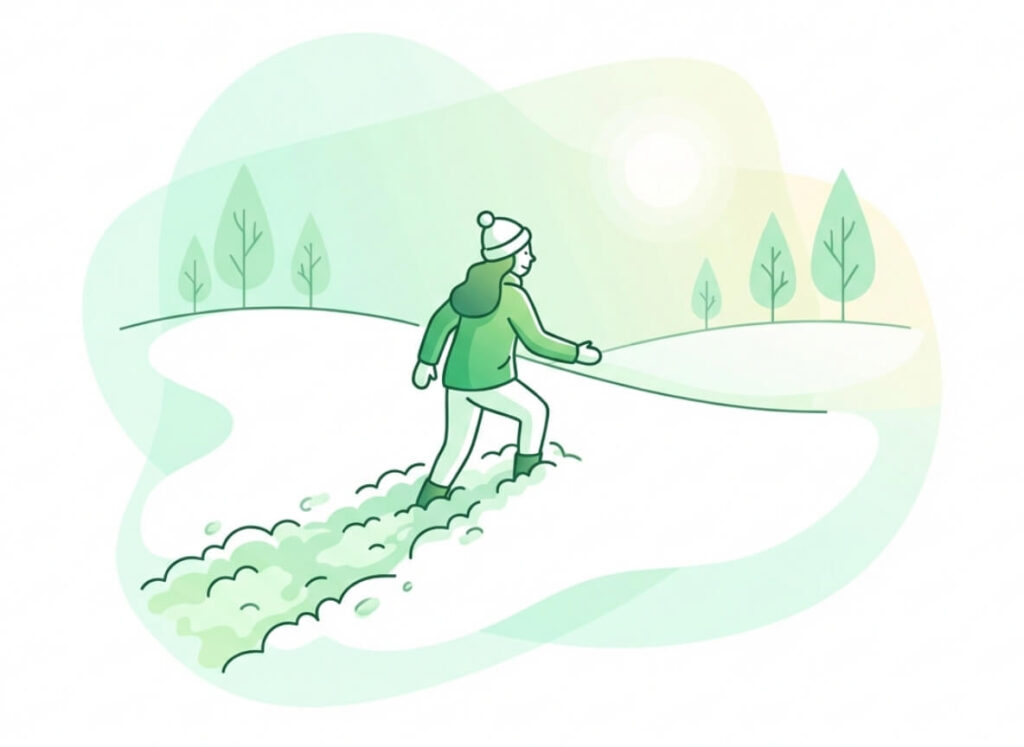
Think of it like this: every time you practice something, you’re making trails through a field (or trails in the snow, if you’re a winter-person). The more you walk the same trail, the more obvious it gets. Wider. Smoother. Easier to choose without thinking.
Stop using it for a while and, sure, it can grow over.
But the “paved” ones, the long-term habits you’ve walked a million times, leave traces. Even if you don’t take that trail for a bit, it’s still the one your brain can find in the dark.
If you’ve been practicing:
- “What’s going wrong here?”
- “What if this fails?”
- “Am I safe right now?”
- “I always mess things up.”
…then you’ve made a very convenient, automatic trail for problem-spotting and threat detection. Under stress, your brain tends to go for the most familiar route.
There’s a classic animal-study that showed that rats can be trained to press a button for cocaine. When the cocaine gets removed and the button does nothing, the rats eventually stop pressing it… until stress shows up. Under stress, they go right back to the button anyway, even when there’s no cocaine.
It’s a solid illustration of why old “paved” paths stick around: stress makes the brain reach for what used to work (or what it thinks used to work), even if it’s not helping now.
But here’s where it gets tricky.
The Catch: Skills Don’t Always Transfer
Remember how Tetris players got really good at rotating shapes and filling gaps?
Turns out, that skill didn’t automatically make people better at other types of spatial reasoning. A 2024 study found that playing Tetris didn’t improve real-world mental rotation tasks that weren’t directly related to the game.
Translation: your brain gets good at the specific thing you practice, but that skill doesn’t automatically transfer to everything else.
So if you’ve been practicing “catastrophic thinking” and “worst-case scenario planning,” you can become weirdly elite at those specific patterns… without becoming better at problem-solving, creative thinking, or calm decision-making.
And when life tosses you new blocks, your brain keeps handing you the same old moves because that’s the game it thinks you’re playing.
You’re Just Well-Trained.
Here’s a more useful question than “What’s wrong with me?”:
I wonder what my brain has gotten really good at.
If you’re constantly overthinking, scanning for threats, or spiraling into worst-case scenarios, maybe it’s skill + repetition.
You’ve spent so much time looking for problems that your brain has turned you into a Problem-Spotting Olympian.
The challenge isn’t that you can’t stop overthinking. It’s that your brain has been taking that same trail for so long, it feels automatic, as if it’s the only route available.
But neuroplasticity works both ways.
If your brain can pave a trail for threat detection, it can also build new trails for other patterns.
You can train for a different game.
What Happens When You Practice Something Else
Let’s talk about practice for a second, because it’s sneakier than people think.
One of my ex’s aikido teachers loved this line: “If practice makes perfect, be careful what you practice.”
Because yeah, your brain doesn’t just practice things on purpose. It practices whatever you feed it repeatedly.
Pay attention to what you’re telling your brain is important.
A lot of times, we don’t realize we’re practicing something. If you’re watching a lot of political rant videos or people talking about how horrible the world is right now, you’re practicing being upset and mad at the world. If you watch a lot of reality TV where people cheat on each other and listen to podcasts about couples who murdered each other, you might be practicing how to be in a bad relationship.
What you take in, through television, social media, the news you read, books, all of those things have an impact on what your brain decides is important and what to look for and what to filter out.
Your brain is incredible in how much sensory information it can process. Your brain then takes all of that information and filters out most of it so that only a teeny tiny fraction of what comes in gets to your conscious awareness. How does it decide what to bring to your attention? What you’ve told it to look for by what you consume and what you practice regularly and what it’s learned are important danger signals from what’s happened in your past. This is why what you take in makes an impact on how you see and interact with the world around you.
Practicing outrage (yep, that’s a thing)
Let’s say you watch a bunch of “outrage videos” on YouTube. Not even the foaming-at-the-mouth ones. Even the “heartwarming” ones that are basically: look at this injustice, now feel mad, now watch it get resolved in 30 seconds.
If you do that every day, your brain gets insanely good at:
- spotting unfairness fast
- scanning for who’s “wrong”
- finding the micro-transgression
- staying on high alert for the next hit of indignation
Then you walk outside and your brain is still in that mode… so it starts flagging similar stuff in real life.
Someone glances at you funny across the street? Ping. Suspicious.
A cashier doesn’t smile? Ping. Rude.
A friend texts “k.”? Ping. They hate you and you’ll be alone forever.
That’s the Tetris Effect, just wearing a different coat.
The cost is real: practicing high-stress patterns tends to make you grumpier, and it absolutely messes with sleep (because your brain doesn’t power down when it’s convinced threat levels are high and it’s on night watch).
You can change the pattern by changing what you practice.
If you want a real-life example of a conscious pattern interrupt: let’s take Paul.
Paul loves to rant and get heated about injustice. He’ll get on his social media, type out the spicy paragraph, get it all out. But then instead of publishing it, he deletes it. (Respect.)
He then deliberately finds and posts something else that’s noninflammatory instead, like cute puppies, or goats, something that nudges his feed (and his nervous system) back toward “aww” instead of “argh.”
While Paul does still watch a fair amount of outrage videos, his algorithm also has a fair amount of cute penguins and otters in it now, too.
The Takeaway
The Tetris Effect isn’t just about video games or overthinking.
It’s about recognizing that your brain gets extremely good at whatever you practice most.
So if you’ve been stuck in a loop of catastrophizing, threat-scanning, or outrage-scrolling, maybe you’ve been rehearsing one very specific mental sport. A lot.
The good news? You can practice different patterns. You can build new trails. It won’t happen overnight, and the old “paved” routes don’t vanish, but you can make other paths easier to access.
Also, if you need a ridiculous but effective counterbalance: consider following a bunch of cute puppy pages in your social media.
You know, an actual folder/bookmark list/Instagram save situation that’s just “aww” on purpose.
Puppies. Otters holding hands. Penguins bouncing after bubbles. Maybe even follow our bulldogs, Charles and Linus’ Instagram. There’s definitely a lot of aww factor there. (And yes, I’m totally biased.)
Because if practice makes perfect… be careful what you practice. And maybe practice a little fun on purpose.
My philosophy is that you have to experiment to find what works for you. So go ahead—try something a little uncomfortable, kiss a few frogs, and see what sticks. Happy experimenting!

New to Manta Mode?
Start with these Posts To Get Your Bearings
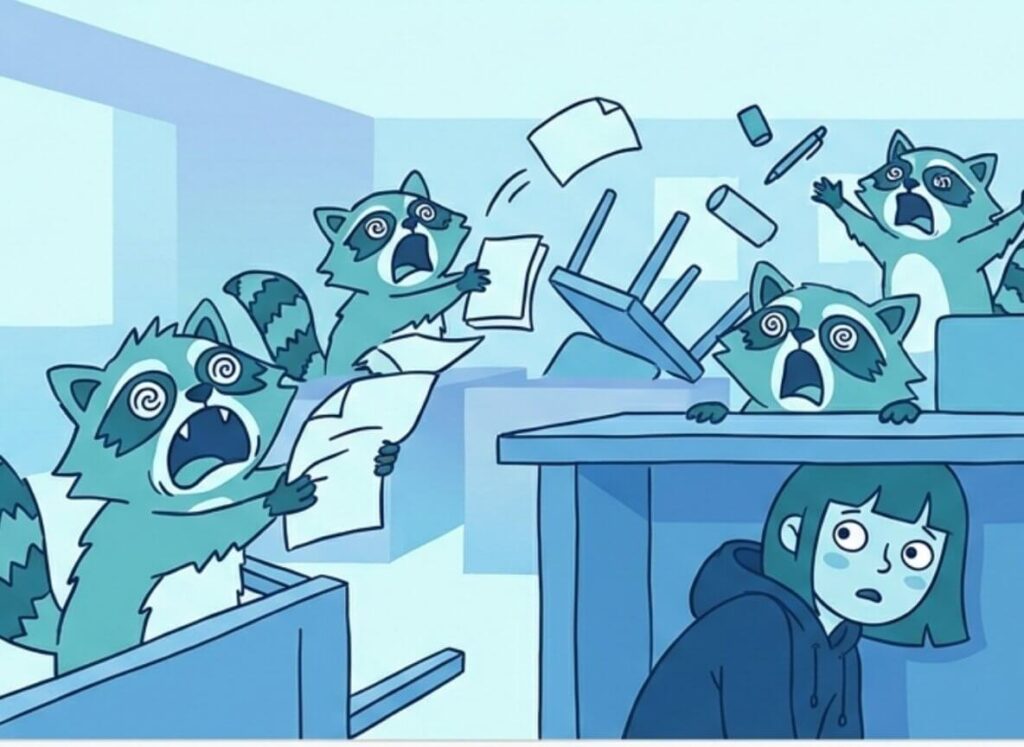
The Manta Mode Raccoons: A Field Guide
Manta Mode Blog The Manta Mode raccoons: A Field Guide Meet the Crew Welcome to…

SPARK 101: The Overview
Manta Mode Blog SPARK 101: The Overview If you’ve been hanging around Manta Mode for…

Confessions of a Weirdo: Why I’m Not Here to Save You
Manta Mode Blog Confessions of a Weirdo: Why I’m Not Here to Save You A…






Home
Take the Quiz
SPARK Foundation
Rewrite the Filter
About Us
Blog
Shop
Community
Newsletter Archive
Contact Us
Contact Info
Email: hello@mantamode.com
Phone: (858) 283-5319
Mailing address:
4079 Governor Drive #5058
San Diego, CA 92122

@Manta Mode | All Rights Reserved
Privacy Policy | Terms & Conditions

