
Manta Mode Blog
SPARK 101: The Overview
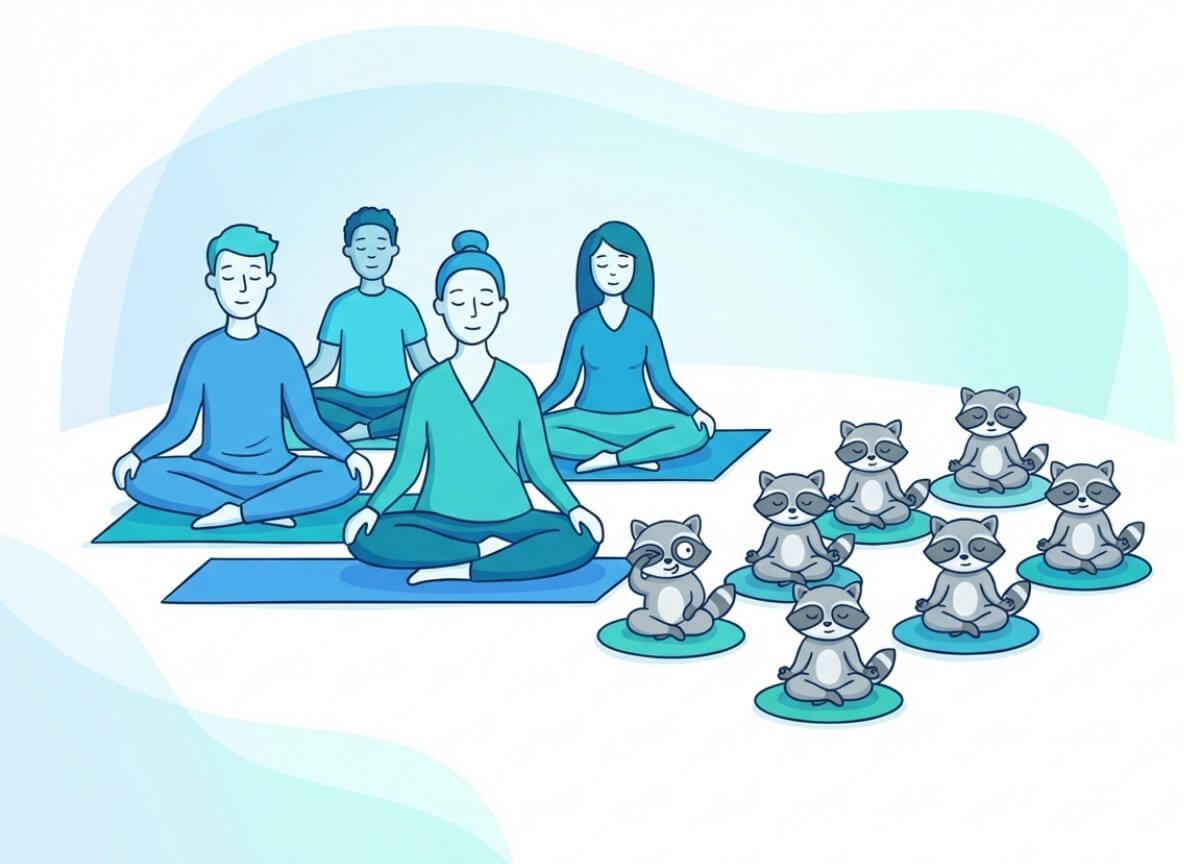
If you’ve been hanging around Manta Mode for more than five minutes, you’ve probably heard me reference “SPARK” or “doing a session” or “reset the filter.”
So let’s actually break down what the heck I’m talking about.
This post is the Grand Central Station for the whole method.
SPARK is the framework I use to interrupt the mental spiral, calm down the chaos, and rewrite the stories that are running your life without your permission. It’s mental skills training (aka brain education) you can use in real life: practical resets, simple steps, and skills you can repeat until they stick – so you can teach your brain to chill out so you can think reasonably again.
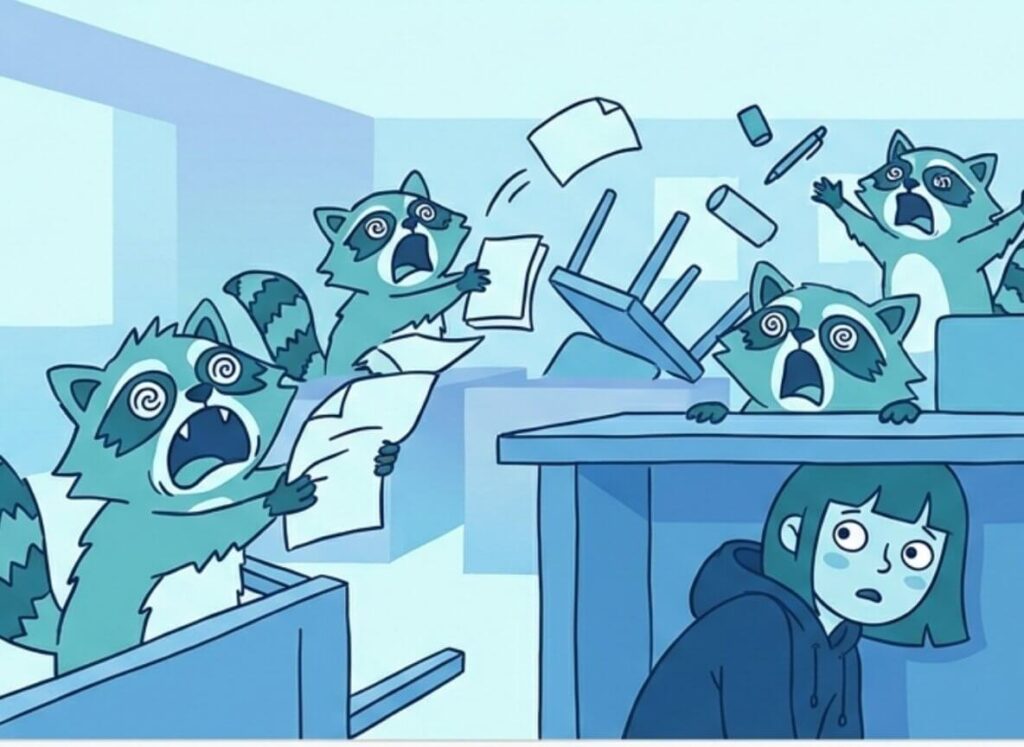
Think of it like this: Your brain (let’s call him Doug) is the stressed-out manager. He’s got a whole filing cabinet of stories about you, most of which were written by other people, some of whom may or may not have had your best interests at heart. Every time something happens, when someone doesn’t text back, you make a mistake, or you see a weird look on someone’s face, your mental gremlins or here we call them the raccoons pull out a megaphone, yank a story out of the cabinet, and start screaming it at you (and Doug) like it’s an emergency broadcast at a metal concert.
SPARK is how we get the raccoons to put down the megaphone so Doug can stop panicking.
Here’s how it works.
S: Space
First, you need to find a pocket of calm in your nervous system so your brain can actually think instead of just react.Space is your “pocket of calm” move. It’s whatever helps your body register, “Okay, I’m safe enough to think.”
Because when the raccoons start throwing flaming garbage, Doug tries to catch it with his face. Space is you gently grabbing Doug by the hoodie and going: “Nope. We’re not doing raccoon dodgeball right now.” This is the “Doug, hey buddy – look at me” and help him snap out of his freak out.

The Space is essentially the Fire Extinguisher. You’re reassuring the brain that this moment is within a handleable range.
This is where Dr. Jill Bolte Taylor’s “90-second rule” can be helpful: the initial chemical surge of an emotion can move through pretty fast if you don’t keep re-hitting the alarm button.
Nuance, because Doug loves nuance: bigger stress chemicals like adrenaline and cortisol can hang around longer – up to about 20 minutes depending on what kicked this off and what your body’s doing.
After that? If you’re still marinating in the same panic, it’s usually not “the moment” anymore. It’s the raccoons re-triggering the alarm by replaying stories, running worst-case math, and doing the classic rumination remix on loop. (Thanks, super helpful guys.)
For some people, deep breathing – especially breathing out longer than you breathe in – helps because that nudges your nervous system toward calm. For others, it’s splashing cold water on their face, going outside, or literally putting your feet flat on the floor and noticing the sensation.
The goal is to feel steady enough to think. Even a 10% shift counts.
If you’re working with me in a session, this is where we start. I’ll walk you through grounding and calming your nervous system so we can dig a little deeper. But you can also do this on your own anytime you notice you’re spiraling. The Default Stress Type Quiz is a great place to start to get your First-Thing-To-Do and figure out which stress type list to look at for more options.
P: Observation Phase (Pattern Awareness)
This is where you start spotting the loop your brain is running.
This isn’t the “fix it” phase. It’s the observation phase. You’re training your brain to notice, “Ohhh, this again.”
Think of yourself as a Lab Tech in your own brain’s science lab.
Your job is not to shame the rat for ratting. Your job is to observe the rat in the maze with curiosity and to take good notes. This is a judgement-free zone. You’re just gathering data.
Every spiral has three parts:
The Match Strike or The Urge: The moment something sets it off and you feel the “must do something NOW” energy show up. A comment, a look, an email subject line, a memory, a random thought… and suddenly the demon raccoon horde is taking over your brain apartment like they pay rent.
The Story: What the raccoons start yelling after the Match Strike. They yank a narrative out of the filing cabinet, hit play on the critic film reels (hello, replays of every mistake you’ve ever made), and start whacking you and Doug with the classic “I’m not good enough” stick. “See? This proves you’re a failure.” “No one actually likes you.” “You’re going to mess this up like you mess up everything.”
The Response: What you do when you believe the Story. Maybe you start scrolling. Maybe you snap. Maybe you go into fix-it mode. Maybe you start snapping at everyone.
Pattern Awareness = noticing the cycle.
At this point, you’re just building the skill of noticing it’s happening and naming it: “That was the Match Strike. That’s the Urge. That’s the Story. That’s my Response.”
The more you practice this, the earlier you’ll spot it, closer to the Match Strike, when you’ve got way more leverage to change your responses and the outcomes.
Address part 1 – The (Metaphorical) Flaming Raccoon Reset
Okay, so you’ve spotted the pattern. Now what?
We’re moving from just observing to action and addressing. This is the Stop, Drop, and Roll for when you start to spiral or are fully engaged in a freakout, the mental fire safety protocol we use when things are getting spicy to get the raccoon horde to stand down.
When a stress pattern hits like a fire in your brain, we use the Stop, Drop, and Roll method to keep the forest from burning down:
- Stop: Create Space. You can’t put out a fire while you’re still running through the dry grass. This is the “Pattern Interrupt” that stops the spiral in its tracks.
- Drop: Drop into your body. Use a physical reset like BFG (Breathe, Feet, Green) to tell your nervous system that you aren’t, in fact, being hunted by a bear.
- Roll: Roll out the story and Address it. Now that you aren’t screaming, we look at the “raccoon” causing the mess and figure out what story it’s telling so we can fact-check it.
And then, instead of trying to yeet the raccoons out of your brain (they’ll just come back with friends), you sit the one mainly responsible down like a tiny chaotic customer in a coffee shop and go: “Cool. Tell me what’s going on.”

Address Part 2 – Tea and Listening
This is the part where you have a conversation with the Responsible Raccoon and get the low down on why it keeps setting off alarms. Your main job is to start the conversation, create a judgement-free and compassionate zone for the raccoon to tell its story, and then perhaps most importantly, Listen.
Tea and Listening Practice is three moves:
- Acknowledge: “Yep. I see you. You’re here and I’m listening.”
- Validate: “Given what you think is happening, it makes sense you’re freaking out.” (This is essentially letting them know that you have heard their point of view and what they experienced.)
- Reflect: “So what you’re saying is… [repeat their story back in plain language to make sure you understood it correctly].”
This is where “Right vs. Right” matters.
What does right versus right mean? It means that you acknowledge and understand that whatever they just told you is What They Experienced. That’s it. You aren’t arguing with them or making them see your own point of view. They have just opened up to you to tell you this is what I think happened to me. They are feeling vulnerable and probably incredibly scared. And what they experienced is their perspective and their truth. Oftentimes, different perspectives will give you a different view of what happened which will lead you to develop a different story. Also, the internal workings of your past and what came to your attention at that moment will change the stories. So really, everyone’s story is a true reflection of what they thought they experienced. Thus while there can be many interpretations of what happened, each version is true to the person that created that story and each version is valid from that person’s point of view.
Even if you have a different version or perspective of an event, you can acknowledge the someone else’s perspective without agreeing that their version is true for you. And in your conversation with your raccoon, you can help it understand that the world is still standing and you’re still okay. You’re basically telling your brain: “We can listen to the alarm system without setting the whole building on fire.”
In a 1:1 session, we can do this in a really targeted way – get the loudest raccoon some tea, let it monologue, and figure out what it’s trying to protect. But even on your own, this step is how you create enough internal cooperation to move to Rewrite.
R: Rewrite (The Real Meat)
This is the part that changes things long-term. This is the real meat of the matter.
Because this is the part that creates long-term change. Everything before helps you get your brain calm enough and cooperative enough to do the thing that actually updates the default.
You can be self-aware all day long and still be stuck. As Paul says: “Self-aware but no self-repair.”
If you stop at Observation + Tea & Listening Practice, you’re basically standing there going, “Wow, yep, that sure is a fire.” Helpful information. But not helpful to put it out.
Rewrite is where you update the story the raccoons keep screaming at you so the same Match Strike doesn’t keep spawning the same raccoon stampede.
After you’ve listened long enough to understand what the Raccoon thinks it’s responding to, the rewriting process helps the raccoon understand a truer reality or at least a more current one, and one that you can verify.
Rather than forcing your brain to chant something it doesn’t believe, you build a mini library of believable, reality-based alternatives your brain can try on.
Rewrite works best when it’s believable. If your brain is stuck on “I’m a failure,” you’ll get more traction with curiosity than a giant leap to “I’m perfect now.”
Try “Bridge” rewrites that keep the door cracked open:
- “I wonder if there’s more to this story.”
- “I wonder what my brain is protecting me from right now.”
- “I wonder if this is something I could put down.”
- “I wonder what I’d say to a friend in the same situation.”
And yeah, sometimes it takes time to go from “I’m a failure” to “I’m doing great.” That’s normal. You’re building a new default one believable rep at a time.
K: Keep Practicing (The Whole Shebang)
This is the part that makes the whole thing work:
You need the whole shebang.
People get stuck when they only do one piece or just a couple of the steps.
- If the raccoons are screaming, trying to tell them to say something else is pretty pointless because it’s going to get lost in the noise.
- If you’re just guessing at what the raccoons are screaming about, you’re just throwing affirmations at them which they will promptly ignore.
- And if you only observe without rewriting… congrats, you’ve become a very educated spectator of your own dumpster fire.
SPARK is a skill you build.
You do it over and over until the new pattern becomes the default.
But the vibe here is Partnership.
Doug isn’t your enemy. He’s your very stressed hardware. The Raccoons are loud. Your job is to keep showing up as Doug’s calm(ish) co-manager.
This is also where you use the Accountability Hack: make a deal with Doug that your only job is to run the reps.
Rather than “fix your whole life today” or “never spiral again,” you’re just asking Doug and the raccoons to be on board with “When I notice, I practice the First-Thing-To-Do.”
And yes, conscious choice counts, even if you choose the old way.
If you notice the Urge, and you still do the old Response? That’s not failure. That’s data. That’s progress. Noticing is the win. You just upgraded from “autopilot” to “manual override available.”
Think of it like going to the gym. You don’t do one bicep curl and expect to have arms like a superhero. You show up, you do the reps, and eventually your brain (and your arms) get stronger.
Same thing here. Every time you spot the pattern, make a conscious choice (any conscious choice), and practice the steps, you’re building new neural pathways. You’re teaching Doug that he doesn’t have to freak out every time something goes sideways.
And yeah, sometimes it feels embarrassingly small.
Maybe you’re just getting to the point where you can notice the Urge without immediately obeying it. Maybe you’re still working on the same Bridge statement you started six months ago. That’s fine. That’s still progress.
The goal is practice, taking the first step. Eventually the first step and the others will start to get easier.
So What Now?
If you’re new to Manta Mode, here’s what I’d recommend:
Start with Space. The next time you notice yourself spiraling, just try one grounding technique. Deep breath. Cold water. Feet on the floor. Whatever works.
Then practice the Observation Phase. Start noticing the Match Strike–Urge–Story–Response loop in your daily life. You don’t have to do anything about it yet. Just notice.
Then do Tea & Listening Practice the next time you catch yourself mid-spiral. Acknowledge. Validate. Reflect. (Yes, it’s a little weird to have tea with a raccoon. Welcome to Manta Mode.)
Then do Rewrite (yes, this is the essential part). What’s one Story your brain loves to tell you? What’s a small, believable “I wonder if…” step that gives you more options?
That’s it. That’s SPARK.
It’s practical. It’s repeatable. It’s a system for helping your brain quiet down long enough to think clearly and make decisions that support where you want to go.
Ready to stop running the manual reps alone? Let’s Rewrite the Filter together in a 1:1 Manta Mode session. We’ll target your specific stress pattern and build a new default that actually sticks.
My philosophy is that you have to experiment to find what works for you. So go ahead—try something a little uncomfortable, kiss a few frogs, and see what sticks. Happy experimenting!


New to Manta Mode?
Start with these Posts To Get Your Bearings
The Manta Mode Raccoons: A Field Guide
Manta Mode Blog The Manta Mode raccoons: A Field Guide Meet the Crew Welcome to…

SPARK 101: The Overview
Manta Mode Blog SPARK 101: The Overview If you’ve been hanging around Manta Mode for…

Confessions of a Weirdo: Why I’m Not Here to Save You
Manta Mode Blog Confessions of a Weirdo: Why I’m Not Here to Save You A…






Home
Take the Quiz
SPARK Foundation
Rewrite the Filter
About Us
Blog
Shop
Community
Newsletter Archive
Contact Us
Contact Info
Email: hello@mantamode.com
Phone: (858) 283-5319
Mailing address:
4079 Governor Drive #5058
San Diego, CA 92122

@Manta Mode | All Rights Reserved
Privacy Policy | Terms & Conditions